
Bwahahahahahahaha
Bwahahahahahahahahahahahahahaha
Horror Beyond Imagination.
Happy Halloween!
(More Sensible Post Soon.)
Bwahahahahahahaha
Bwahahahahahahahahahahahahahaha
Horror Beyond Imagination.
Happy Halloween!
(More Sensible Post Soon.)

Three days. Three days separated these two strips. Last Friday, Montoni’s was closed, because a “Crankshaft sets things on fire” joke needed it to be closed. Today, Montoni’s is open, because it’s time for Pete and Mindy to get married. And because Pete is such a cheap, lazy schlub he wouldn’t dare go anywhere else. You’d think the writer of a multi-billion dollar movie franchise might do something a little special for a wedding proposal. Like Carrabba’s, in Westlake. Is he going to give her salad dressing too?
Continue reading “Schrodinger’s Pizza”Hey folks, Banana Jr. 6000 here stepping in, with the second entry in my hopefully educational TBTropes series.
One of Tom Batiuk’s crazy blog posts, from a couple years ago, was about his decision not to use fourth wall breaks anymore after Act I ended. He said:
I stopped doing that because, while it’s funny, you lose the investment and involvement of the audience. They know the characters are going to be just fine, and they don’t really care about their fate. By breaking the fourth wall, I inject myself into the story to wink at the reader as we share the joke. Now, however, I began telling stories where my presence was less intrusive and less needed.
https://tombatiuk.com/komix-thoughts/match-to-flame-160/
Batiuk doesn’t seem to realize what he also lost when he made this decision. Continue reading “Monological Imperatives In Dick And Jane”
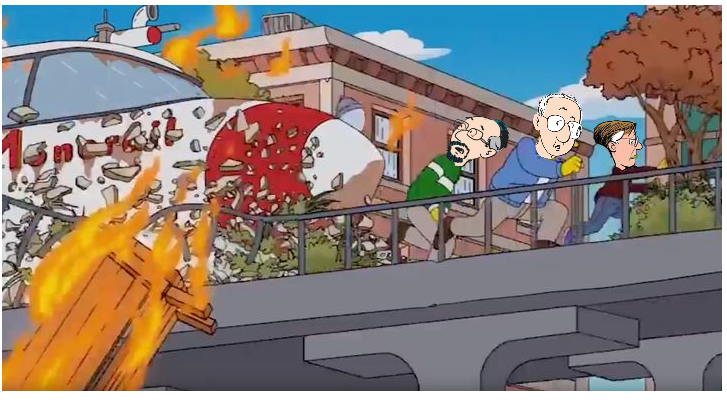
Post two of this three post series, and yes, we have slowed this year long retrospective train down to ONE STRIP AT A TIME. Deal with it. It’ll speed up again, don’t you worry. I can’t imagine I’ll have much to say about ‘Strip #1,289 of DSH and Crazy talking about comics being nice.’ We’ll be speeding through that material like an out of control Simpsons Monorail.
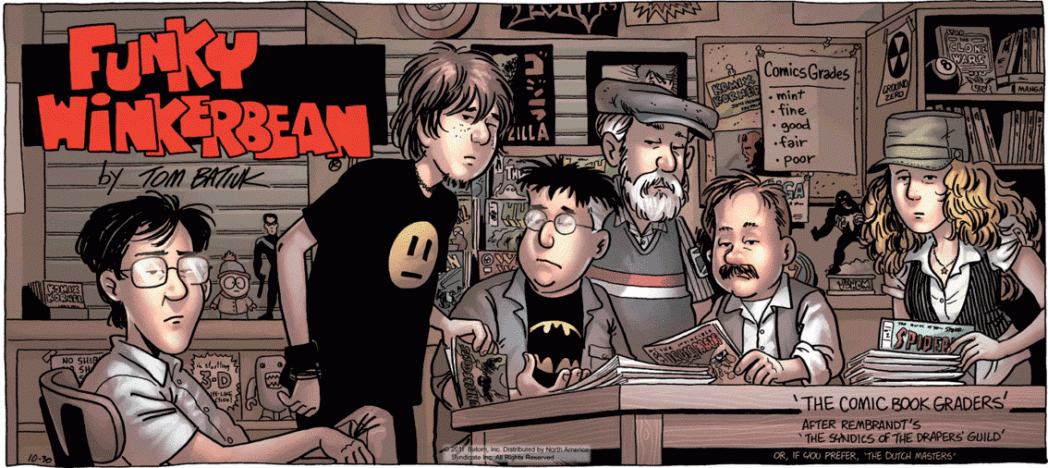
Sunday October 30, 2011. Batiuk has Ayers spend hours of his life drawing a bunch of nerds in a pointless single panel strip as a homage to a Rembrandt painting. Why? I don’t know. I guess he’s trying to imply that the grading of second-hand comics by a group of high schoolers and small business owners has the same amount of solemnity and grandeur of elected officials grading the quality of hand woven cloth.
The only thing I got from it is a nerdy version of ‘I Spy’. I found ‘Star [The Clone Wars] Wars’, Hellboy, Stan Marsh, Venom, Domo, and Ground Zero comics. What can you find?

 Son of Stuck Funky