I had previously showed and examined the history of Sadie Summers to determine whether or not she lived up to Batty’s assertion that she was his biggest mistake. I, and others it seems, did not really see her the same way her creator did and that her biggest problems were endlessly underused potential and missed opportunities. After all, she did manage a 15 year run and it took a literal decade long timeskip for Batty to finally get rid of the character he so detested. So she was a failure mostly through no fault of her own.
In terms of failed characters in Funky Winkerbean, there are plenty that would hope to be as successful as Sadie was. Today, we’ll be looking at some of these characters and speculating on where things went wrong. This won’t be a comprehensive look at any one character but little snippets of a large variety of them. So let’s get started with the Parade of Failed Characters.
LIVINIA SWENSON: One of the more well known examples of this group. Present in the very first strip, she would appear fairly regularly early on with what seemed to be a few stock gags. First, there was her repeated shooting down of eternal loser Les Moore.
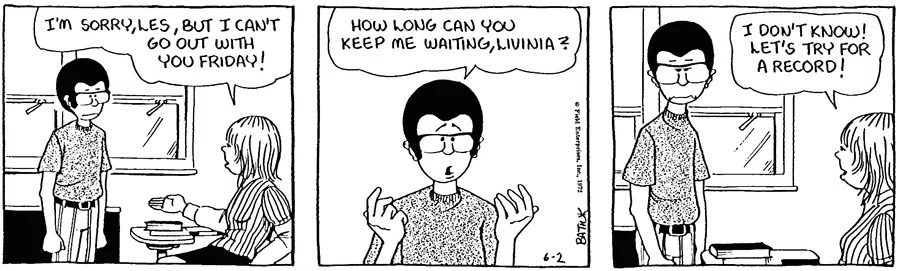
And there was also her being a young feminist.
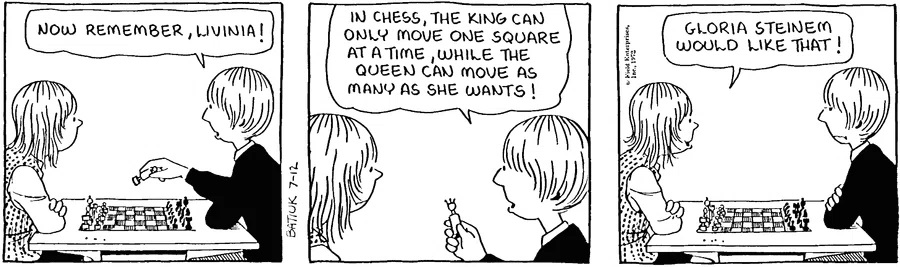
However, her prominence would very quickly diminish and by the second year or so of the strip she’d quickly become barely better than a generic student. Her appearances would go down in number dramatically, with her final one being a wordless appearance in the Fourth of July 1976 strip.
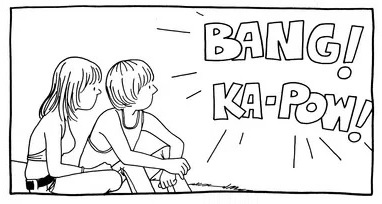
Infamously, she would “show up” at one of the many Coming Reunions having been killed offscreen via her name and photo on a board showing Westview High School students who had died, many decades after she’d stopped showing up.
Why She Failed: Likely a case of Batty just not knowing what to do with her. He probably figured there wasn’t a lot of mileage in her young feminist thing and her shooting down Les became redundant once Mary Sue Sweetwater was introduced to fill the same role. Also she was The Girl and we all know how ineffectual Batty is at writing women.
ROLAND MATHEWS: Another character who appeared in the very first strip. He was the radical leftist who didn’t bow to The Man, man, and played by his own rules.
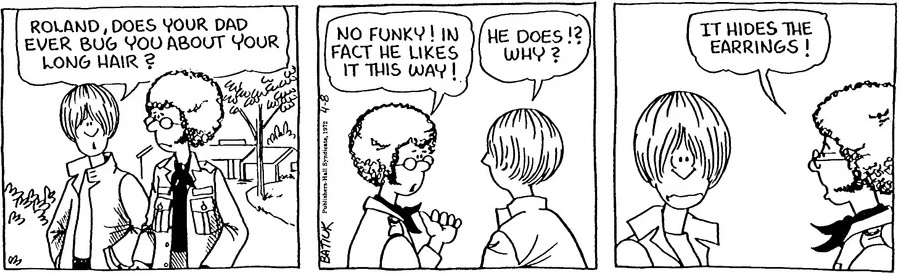
But he was also something of a hypocrite given his denigration of the women’s lib movement (via his antagonism of Wicked Wanda) and fighting capitalism with capitalism.
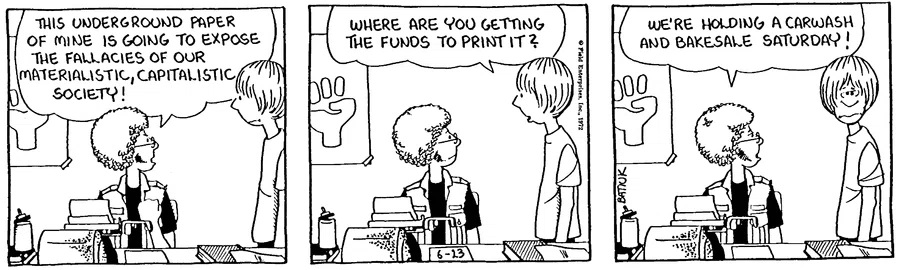
By 1975, however, he would be gone.
Why He Failed: The likely reason is that Batty probably figured there wasn’t enough to be mined from his shtick. Roland and Livinia both had the problem of being tied to specific cultural moments that were long becoming passé by the time they were being phased out in the mid-’70s. Of course it would be shortsightedness on TB’s part because the hypocritical radical never goes out of style and there were plenty of ways to take Roland’s character after Act I as well. So naturally Batty decided to do the most logical thing and after nearly half a century bring Roland back in the waning months of the strip…
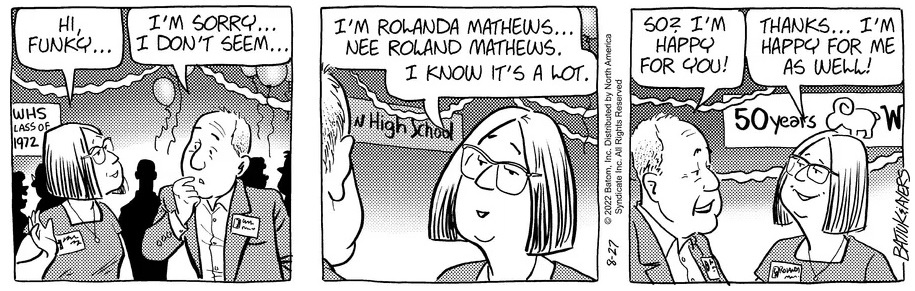
…as a transgender woman named Rolanda and using the first strip posted as justification. It’s easy to say that Batty was simply pulling a contemporary issue out of his ass in a shallow and thoughtless attempt at chasing glory. It wouldn’t be the first time he’d do it with LGBT issues after all. But I’ll give him the benefit of the doubt as in 2025 comics writer Tony Isabella would come out as a transgender woman named Jenny Blake Isabella. Given how close they are, I don’t think it would be surprising if Batty knew about it long before Isabella came out publicly so I’m willing to take it more as a shout out to a good friend… with a little self-aggrandizing back patting on the side.
DEREK AND JUNEBUG: A pair of characters from early in the strip’s run. Derek, being African-American, seemed to exist as an excuse to make race-based jokes. Though they were never at his expense but rather directed at the unintended ignorance of characters like Les and Funky.
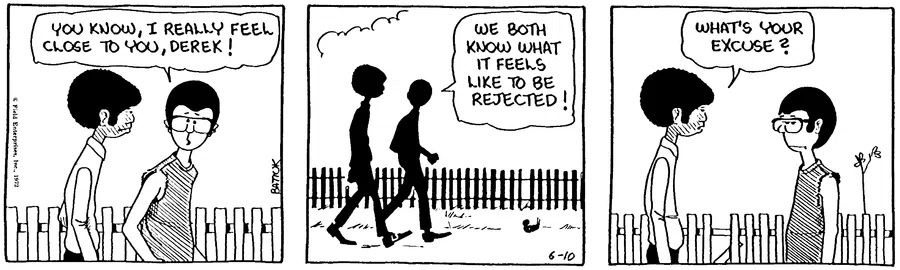
While Junebug was… well…
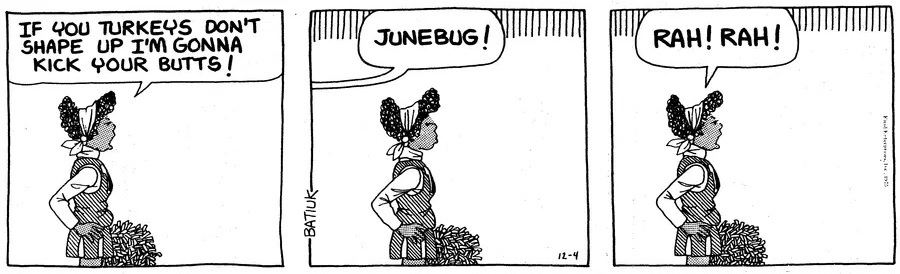
Yeah.
Neither would be written out or completely disappear per se. Junebug would appear well into the late portions of Act I as one of the cheerleaders in the recurring Cheers For Losing Football Teams gag weeks. Although like a lot of similar gag weeks she, specifically, does not need to be there for the joke to work. Derek’s importance would just steadily plummet and not even an attempt to give him a hip new hi-top haircut late in Act I could bring him back to relevance.
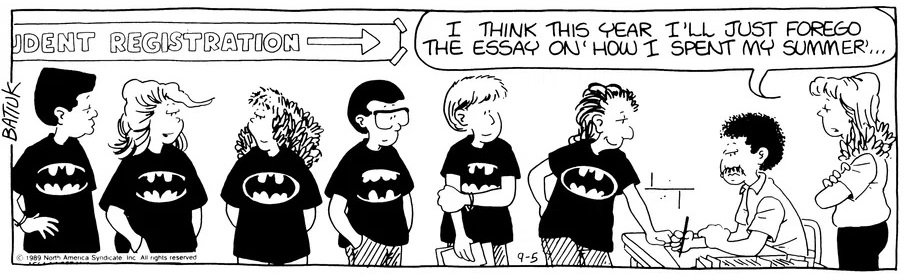
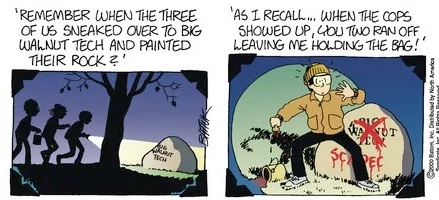
After Act I, both Derek and Junebug would continue to make what amounted to glorified cameos during the various Reunions That Came and Went and poor Derek would later get retconned out of a remembrance of the story where he, Funky, Les and Crazy Harry painting Big Walnut Tech’s school rock.
Why They Failed: As said, Derek mostly seemed to be a vehicle for race jokes and perhaps Batty quickly grew to feel uncomfortable with that. But he also seemed to serve the role of straight man having to grudgingly deal with the morons he was surrounded by and that’s still funny on its own. But I suppose Batty didn’t think so. Junebug was pretty much little more than a loud and sassy black woman and I could see Batty probably realizing that what amounted to an eyerolling stereotype wasn’t going to fly.
Of course, the work could have been done to make them into more rounded characters but effectively dropping them is much easier and never let it be said that Batty didn’t take the laziest way out of a given situation.
MARY SUE SWEETWATER: Batty’s Original Cindy, the first Batiuk Blonde goddess and unending desire of Les’ affections and unfortunate victim of his many romantic overtures.
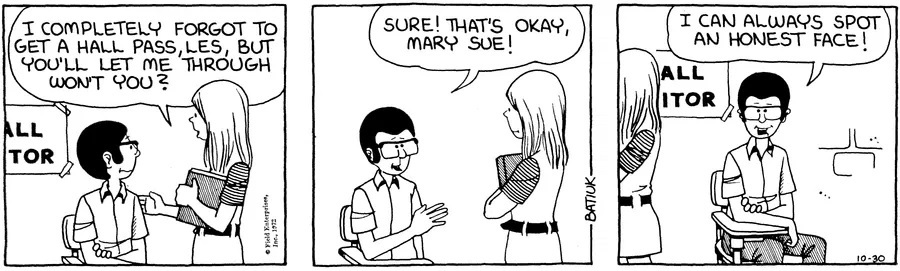
She lasted at some point up into the 1980s but her relevance had massively declined long before then as Batty had other gags for Les and decided to have him pointlessly swoon over a variety of new girls instead, including a story arc with an unseen girl that our own BJ6K utterly despises.
In the later portions of Act III, though, Batty was feeling nostalgic and decided to drag Mary Sue out of mothballs but not before deciding that she needed a little divine punishment for denying God’s Favored Son what was rightfully his.
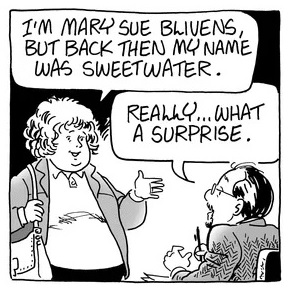
But Batty was not quite done with humiliating Westview High’s formerly most popular girl and in 2022 poor Mary Sue would be unceremoniously Livinia’d, probably of diabeetus or something. But she deserved it for her cruel treatment of famous writer and Oscar-winning actress Leslie Moore.
Why She Failed: She never had much in the way of personality to begin with and as stated it seems that TB very quickly grew bored of her. Once Cindy showed up her fate was sealed.
JEROME: A marching band member who was introduced as a rival to/annoyance for Holly.
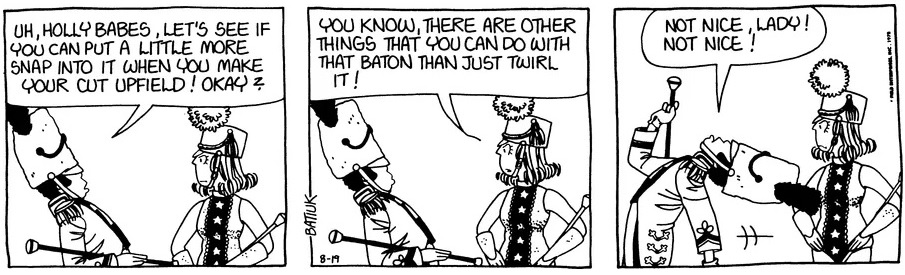
He marched out about as quickly as he marched in.
Why He Failed: Incredibly easy to see why. His entire joke was pretty much his posture as part of him taking the band too seriously. It’s not remotely funny and I can imagine that this is one of the few instances where Batty stopped and rightly thought “What the hell was I thinking?” and immediately deep sixed him.
BODEAN: A delinquent introduced during the late Act I story arc where Barry Balderman is forced to go to summer school.
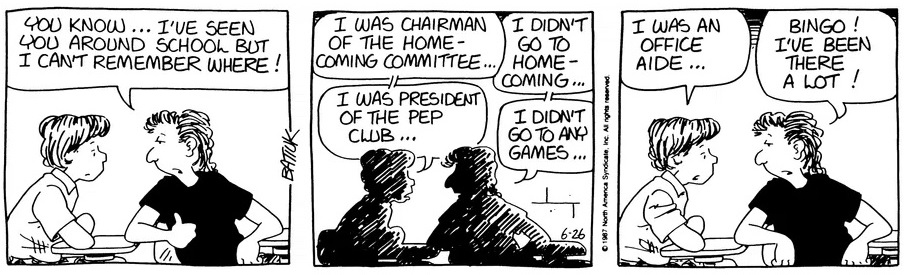
He and Barry connect during the summer, bonding over their shitty parents and Barry helping him discover that he’s dyslexic, which Barry is knowledgable about because he too is dyslexic. Unfortunately literally none of this is ever followed up on and outside of a few small appearances Bodean fades away before Act I even ends.
Why He Failed: I guess Batty really wanted to do a Breakfast Club riff focused on Brian and Bender and once he got it out of his system he didn’t really have much use for Bodean. Hilariously, he’s mentioned prominently in the description for The Complete Funky Winkerbean, Volume 6 (on sale now, BUYITBUYITBUYIT) as a new cast member alongside Cindy Summers so Batty seems rather proud of a character he almost immediately discarded.
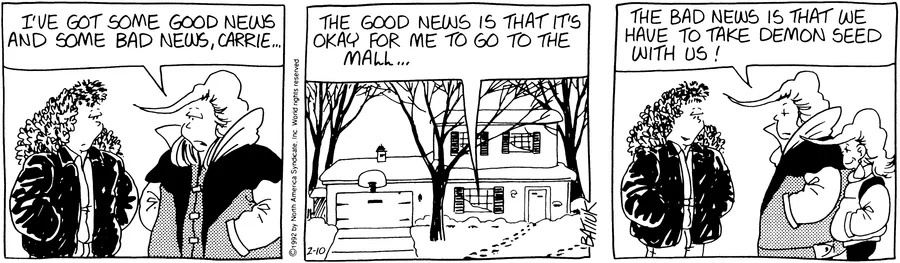
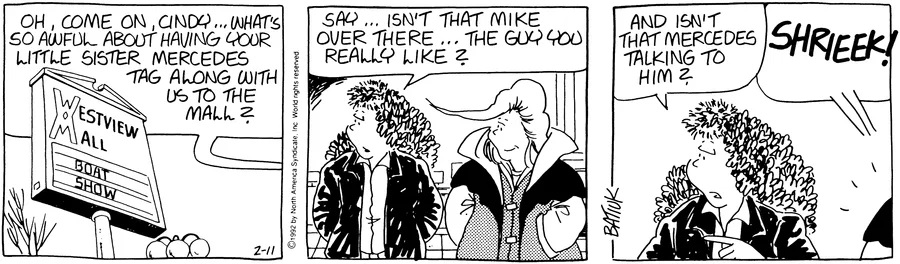
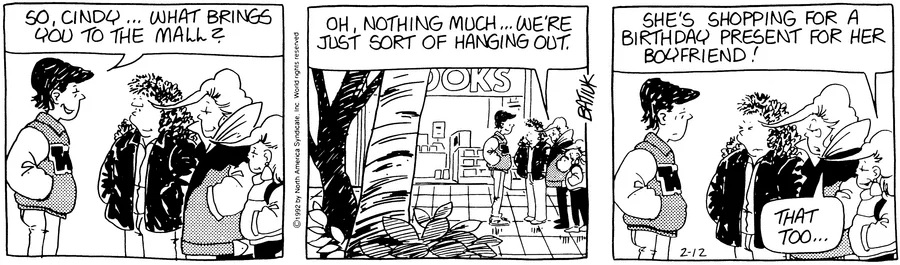
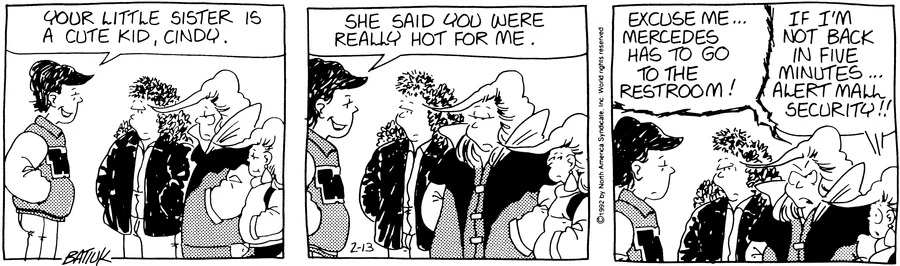
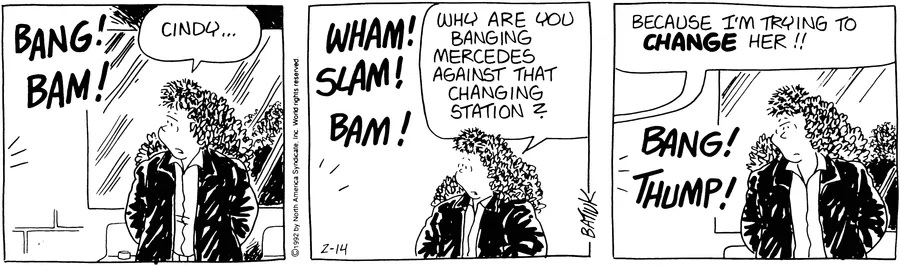
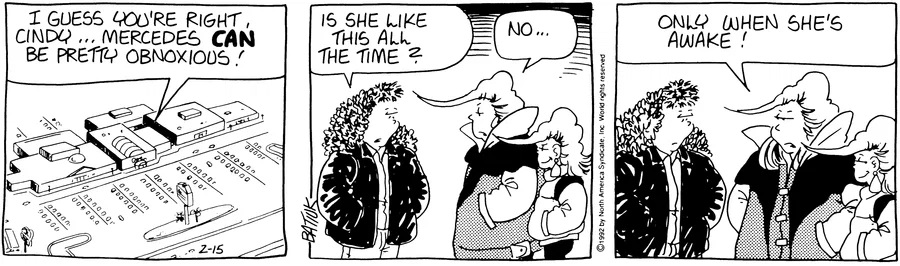
CARRIE: Cindy Summers’ best friend and right-hand girl during Act I. Carrie pretty much served the expected role of both enabling her friend but also being one of the only people willing or able to give her a needed ego check once in a while.
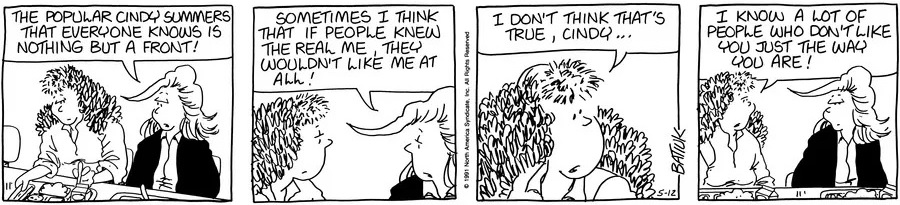
She even gets a story dedicated to her late in Act I when she gets caught shoplifting at the mall.
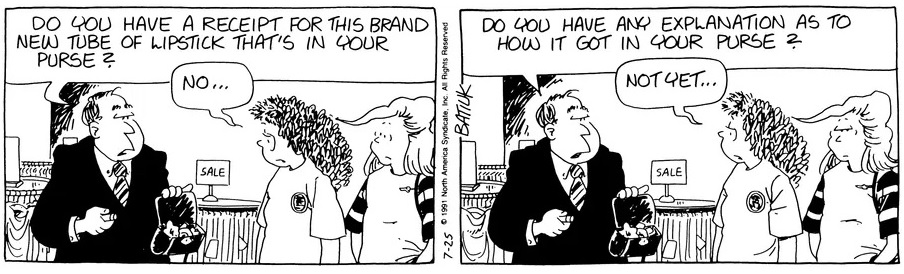
But while she appears right up until the very end of Act I she doesn’t survive the transition to Act II, only getting small appearances during Cindy’s wedding to Funky and Cindy serving as maid of honor at her own wedding.
Why She Failed: Pretty easy to see in this case. Act II and beyond Cindy is such a completely different character from her Act I self that there really wasn’t much of a place for the Alpha Bitch’s Sidekick when Cindy’s attitude had 180’d like that. Maybe she still could have had use as someone for Cindy to bounce off so she has her own circle outside of the Montoni’s Dungeon but really, Carrie mostly filled a role that wasn’t needed anymore.
DUANE: Duane was a slow kid who Les hung out with in the gym a couple of times.
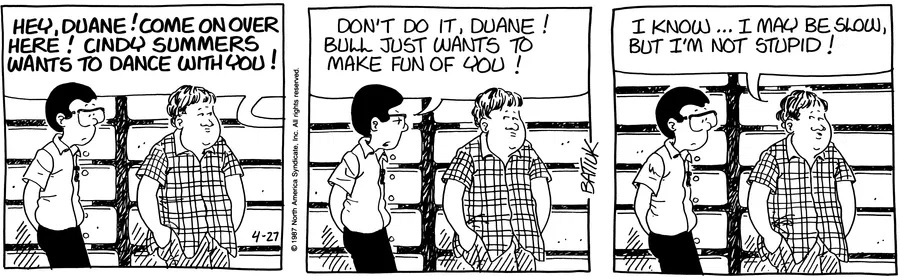
After only a handful of appearances he disappeared.
Why He Failed: Another one that seems pretty easy to see. I’m guessing Batty quickly got cold feet at making jokes about an intellectually disabled person. At least one that wasn’t an evil sporto.
GINNY WOLFE: If the saying “the candle that burns twice as bright lasts half as long” could apply to any single character in Funky Winkerbean, then it would easily be Ginny. She first shows up in 1985 as a mere substitute teacher.
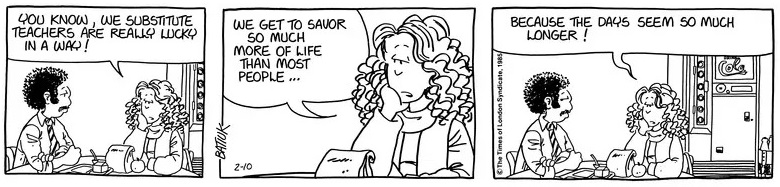
But almost immediately she’d be either promoted or retconned into being a full-time teacher and regular member of the cast, teaching a sort of vague health/family class. Her most notable trait was that she seemed to be just about the only teacher who actually tried to do her job seriously which seemed to cast her in the role of Westview’s Frank Grimes.
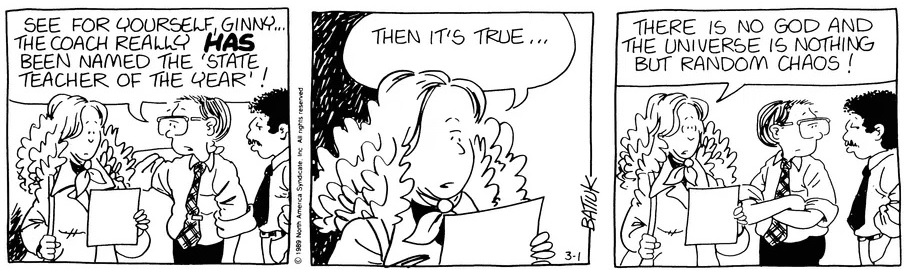
She got a rather nice moment near the end of Act I, dancing with Les at the prom in an attempt to lift his spirits after his date stood him up. This friendly relationship between the two would continue into the first year of Act II where Ginny was portrayed as Les’ main work buddy.
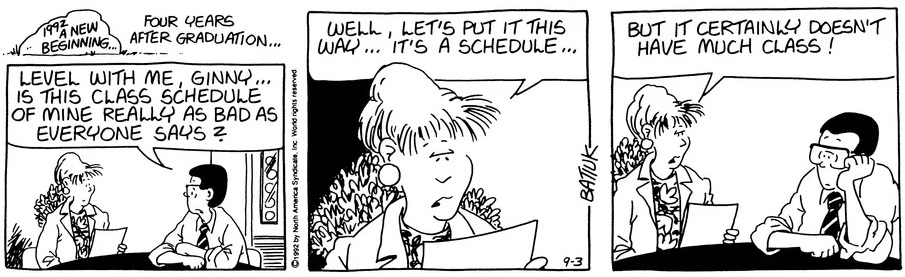
She then completely disappears at the start of the 1993 school year, her spot having been taken by new teacher Linda Lopez who is basically just Ginny right down to teaching the same class. Only hispanic and much more jaded. No mention is ever made of why Ginny was gone, not even an off-handed line about taking a job at another school or anything like that.
Why She Failed: I… I don’t know. I really don’t. She’d been a regular and prominent character since the mid-’80s and then poof! There one minute, gone the next with no explanation. The only thing that makes even a shred of sense to me is that perhaps TB wanted to add a bit of diversity to the cast and so decided to replace Ginny with an effectively similar character. But really, out of all the characters in this entry Ginny’s “failure” is the most baffling because she wasn’t really a failure at all.
TRACY: In 1989 it was yet another prom story and Batty decided to actually do something with the strip’s namesake, who’d long been supplanted from his role as central character by Les, and give him a girlfriend. Thus come prom, Funky is one of many boys vying for the previously unseen and newly single Tracy and lucky him, she chooses to go with him.
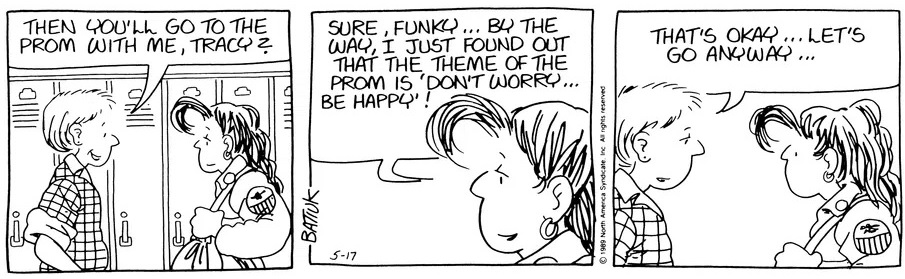
Funky and Tracy would be an item all the way up until the time jump at which point she’d disappear until randomly coming back for a week in 2005.
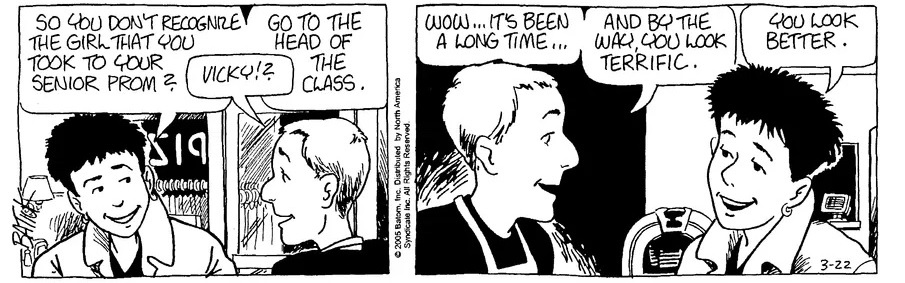
At least I think this is Tracy. I’m pretty sure this is Tracy. Vicky was the name of a girlfriend that Funky had in the first year or two of the strip but seeing as this “Vicky” was Funky’s prom date I assume this is Batty screwing up names or something. Anyway, this led to Funky briefly falling off the wagon which caused some short-lived strain in his relationship with Holly in the lead up to their wedding. Tracy would disappear for good after this but managed to get a small cameo in an Act III strip where Funky is reminiscing about a merry-go-round.
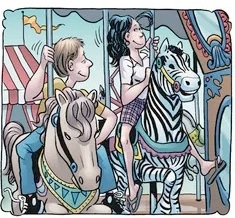
Why She Failed: Even during Act I Batty didn’t seem to have much of an idea as to what to do with her. Her personality largely began and ended at Funky’s Girlfriend. But hey, their relationship lasted longer than the Divine One from Act I.
CLIFF: In the mid-’90s, Fred Fairgood decided that WHS needed a security guard and hired only the best of the best.
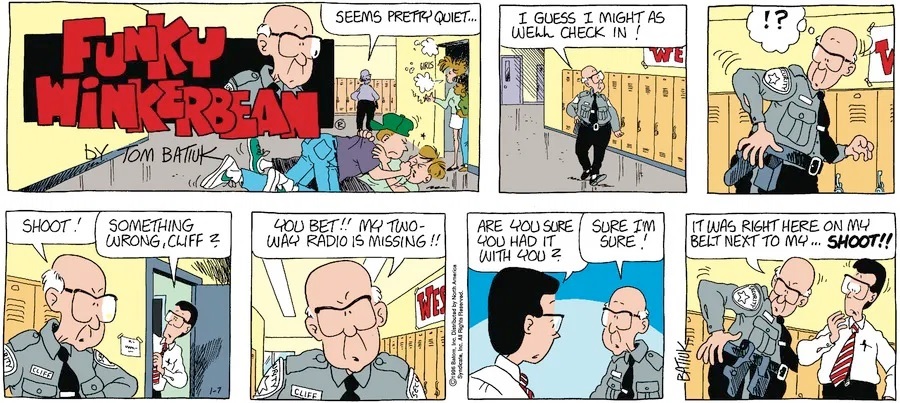
Cliff was another character who’d disappear fairly quickly but he makes what is probably the most confusing appearance in the entire strip. During Crazy Harry’s time travel trip back to 1980, he stops by WHS and gets accosted by none other than Cliff as he tries to warn Lisa about The Cancer.
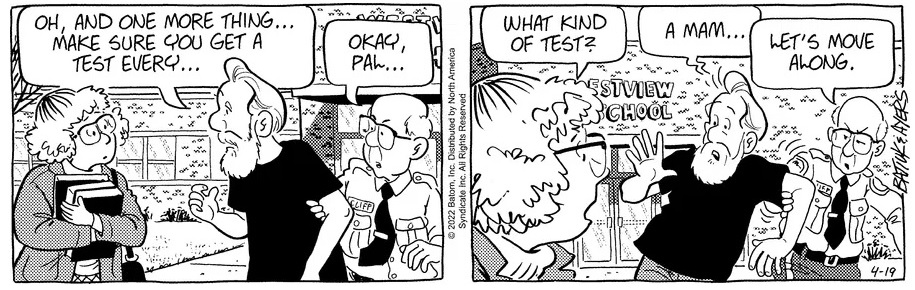
“No wait, wasn’t Cliff not introduced until the ’90s?” you’re likely wondering. “Didn’t you just say he was hired by Fred who wasn’t principal at the time this strip is supposed to take place?” Yes, you’d be correct. Given that only a few months later, the Funky gang would be shown as having graduated in 1972, it’s clear that by this point Batty had long stopped caring about keeping the timeline coherent. So Cliff was somehow a security guard 16 years before he got hired which was 8 years after the gang had graduated high school and nobody thinks anything of it.
Why He Failed: Batty seemed to have a thing for the “old person doing stuff that old people don’t do” gag and Cliff was just one example of that. But his gag wore thin very, very quickly so it’s easy to see why he’d stop showing up. He was an Act I style character in a post-Act I world.
CARLO: It’s 2000, Funky is now co-owner of Montoni’s and decides he needs some extra help so it’s time to hire a dedicated cook. He eventually settles on Carlo whose whole shtick is that he’s a preening prima donna chef, not a mere cook.
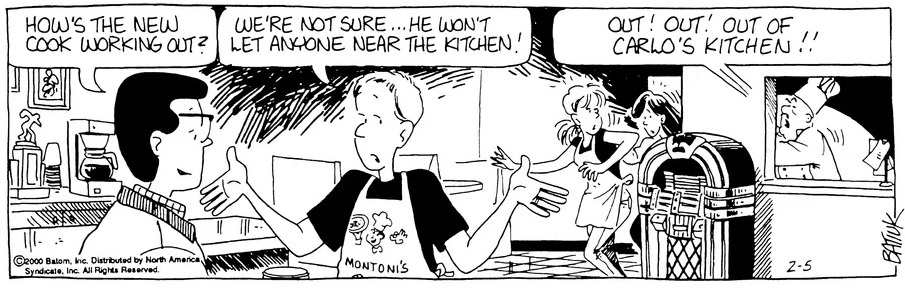
As quickly as he showed up he… well, doesn’t not show up but stops having much of any focus. He does inexplicably manage to last all the way into Act III, still an employee of Montoni’s in 2010.
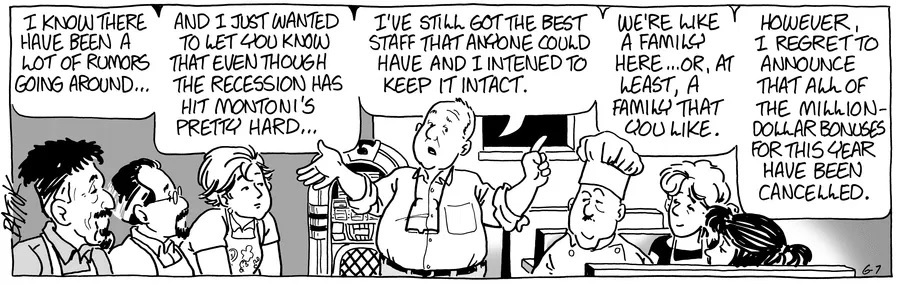
The gang’s all here. There’s Khan aka Kahn, Les, Holly, Funky, Carlo, Rachel and wait; hold up. Who’s that on the far end? It’s… a waitress who randomly shows up for a single strip in 2009 as if she’s been waitressing at Montoni’s the entire time.
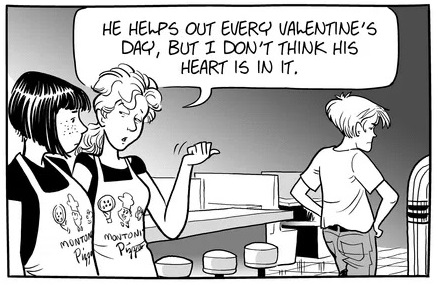
Anyway, in spite of Funky’s assurances, that 2010 strip above turns out to be the last appearance of Carlo (and Dark-Haired Freckle-Faced Waitress) as near as I can tell.
Why He Failed: He had one joke and it sucked, simple as. DHFFW standing around and looking sad was more intriguing than him.
JAROD POSEY: Balding moody loner who, as punishment for smoking in the bathroom, gets forced to watch the football team practice.
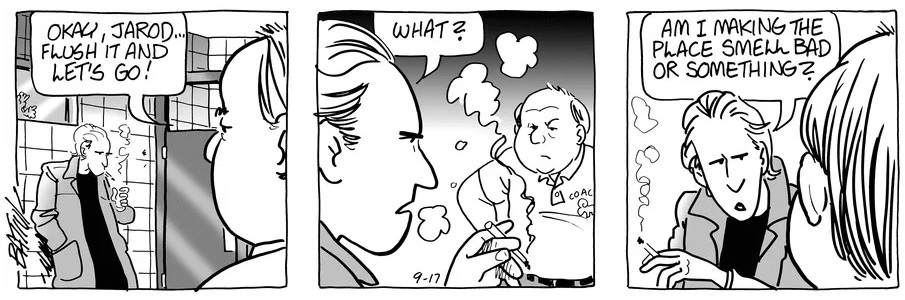
Shock of all shocks, he actually has a great arm and is quickly press-ganged into being the new quarterback for the Scapegoats. Despite doubts, he leads the team to a win.
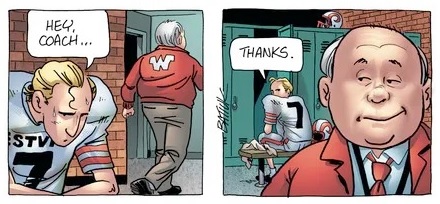
You’d figure that this would be an ongoing story. The talented outcast finding success on the football field and gaining the acceptance of his peers, you know? Of course not. Outside of a one-off cameo where he puts the moves on Gloomy Crankshaft Twin he never again shows up.
Why He Failed: Batty is lazy.
While this is not an exhaustive list of characters we’re running kind of long so this is as good a place as any to wrap it up. To run it back to the start of this piece, Sadie is far from the only failed character in Funky Winkerbean and characters can fail for many reasons. Some, like Jerome and Carlo, are shallow and ill-conceived and worthy of all the negatives that Batty (or the reader) can throw on them. But many come down to TB being too lazy to have simply taken a few minutes to think about what could be done with them once he’d seemingly mined all he was going to mine. Some times he just made really nonsensical decisions like memoryholing Ginny or doing nothing with the easy story of outcast jock Jarod’s rise to being the big man on campus.
I guess in conclusion, all I can really say is that Batty should have given more appearances to DHFFW.

Where did she come from? Why is she so sad? Is it because she knows she’s a great design wasted on a piece of wallpaper? Is it because she’s trapped in Westview? I suppose like many of these other failed characters, we can only speculate on what could have been.